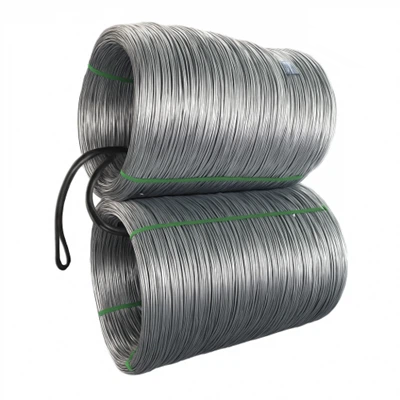
Hey there! As a supplier of 316 round bars, I know how crucial it is to ensure top - notch quality. In this blog, I'll share some key steps and tips on how to make sure that the 316 round bars we offer meet the highest standards.
1. Raw Material Selection
The quality of a 316 round bar starts with the raw materials. 316 stainless steel is an alloy that contains chromium, nickel, and molybdenum. These elements give it excellent corrosion resistance, especially in chloride - rich environments. When sourcing raw materials, we need to work with reliable suppliers.
We should check the chemical composition of the raw steel. The percentage of elements like chromium, nickel, and molybdenum should be within the specified range. For 316 stainless steel, the chromium content is typically around 16 - 18%, nickel around 10 - 14%, and molybdenum around 2 - 3%. Any deviation from these ranges can affect the performance of the final product.
For example, if the nickel content is too low, the corrosion resistance of the 316 round bar may be compromised. We also need to ensure that the raw materials are free from impurities. Impurities such as sulfur and phosphorus can reduce the ductility and weldability of the steel.
2. Melting and Casting Process
Once we have the right raw materials, the next step is the melting and casting process. This is where the raw steel is transformed into a more workable form.
We use advanced melting techniques, like electric arc furnaces or induction furnaces. These methods allow us to precisely control the temperature and chemical composition during the melting process. By carefully monitoring the melting process, we can ensure that the alloying elements are evenly distributed throughout the molten steel.
After melting, the steel is cast into billets or ingots. The casting process is also critical. We need to control the cooling rate to avoid defects such as cracks and porosity. If the cooling is too fast, internal stresses can build up, leading to cracks in the cast product. On the other hand, if the cooling is too slow, the grains in the steel may grow too large, which can reduce the strength and toughness of the 316 round bar.
3. Forging and Rolling
After casting, the billets or ingots are further processed through forging and rolling. Forging is a process where the steel is heated and then shaped using hammers or presses. This helps to refine the grain structure of the steel, improving its mechanical properties.
During forging, we need to control the forging temperature, deformation rate, and number of forging passes. The forging temperature should be within the appropriate range to ensure that the steel is malleable without overheating and causing grain growth.
Rolling is another important process. It is used to reduce the cross - section of the steel and give it the desired round shape. We use precision rolling mills to ensure that the diameter and surface finish of the 316 round bar meet the required specifications. The rolling process also helps to further improve the mechanical properties of the steel by aligning the grain structure.
4. Heat Treatment
Heat treatment is a crucial step in ensuring the quality of 316 round bars. It can be used to relieve internal stresses, improve the hardness, strength, and ductility of the steel.
One common heat treatment process for 316 stainless steel is solution annealing. In this process, the round bar is heated to a high temperature (usually around 1010 - 1120°C) and then rapidly cooled. This helps to dissolve any carbides that may have formed during the previous processes and ensures a uniform microstructure.
Another heat treatment option is stress relieving. This is done at a lower temperature (around 550 - 650°C) and is used to reduce internal stresses that may have been introduced during forging, rolling, or machining. By carefully controlling the heat treatment process, we can optimize the mechanical properties of the 316 round bar.
5. Machining and Finishing
Once the 316 round bar has been heat - treated, it may need to undergo machining and finishing processes. Machining can be used to achieve the exact dimensions and surface finish required by the customer.
We use advanced machining techniques such as turning, milling, and grinding. During machining, we need to use the right cutting tools and parameters to avoid damaging the surface of the round bar. The surface finish is also important, as a smooth surface can improve the corrosion resistance and aesthetic appeal of the product.
After machining, the round bar may be subjected to finishing processes such as polishing or passivation. Polishing can give the bar a shiny appearance, while passivation is a chemical treatment that forms a protective oxide layer on the surface of the steel, further enhancing its corrosion resistance.
6. Quality Inspection
Throughout the entire production process, quality inspection is essential. We use a variety of inspection methods to ensure that the 316 round bars meet the required standards.
Visual inspection is the first step. We check the surface of the round bar for any visible defects such as cracks, scratches, or pits. We also measure the dimensions of the bar using precision measuring tools to ensure that they are within the specified tolerances.
Non - destructive testing methods are also used. For example, ultrasonic testing can be used to detect internal defects such as cracks or inclusions. Magnetic particle testing can be used to detect surface - breaking defects in ferromagnetic materials.
In addition to these methods, we also conduct mechanical testing. This includes tests such as tensile testing, hardness testing, and impact testing. Tensile testing measures the strength and ductility of the steel, while hardness testing determines the resistance of the steel to indentation. Impact testing assesses the toughness of the steel under sudden loading.
Comparison with Other Stainless Steel Round Bars
It's worth comparing 316 round bars with other types of stainless steel round bars, such as 430 Stainless Steel Round Bar, 420 Stainless Steel Round Bar, and 303 Stainless Steel Round Bar.
430 stainless steel is a ferritic stainless steel. It has good corrosion resistance in mild environments but is not as corrosion - resistant as 316 stainless steel, especially in chloride - rich environments. 420 stainless steel is a martensitic stainless steel, which is known for its high hardness and strength. However, its corrosion resistance is also lower compared to 316 stainless steel.
303 stainless steel is an austenitic stainless steel that is highly machinable. But its corrosion resistance is not as good as 316 stainless steel, especially in harsh environments. So, depending on the application, 316 round bars may be the better choice due to their superior corrosion resistance.


Conclusion
Ensuring the quality of 316 round bars is a multi - step process that involves careful raw material selection, precise manufacturing processes, and thorough quality inspection. By following these steps, we can offer high - quality 316 round bars that meet the needs of our customers.
If you're in the market for 316 round bars and want to discuss your requirements, feel free to reach out. We're here to help you find the best solutions for your projects.
References
- ASM Handbook, Volume 13A: Corrosion: Fundamentals, Testing, and Protection
- Metals Handbook Desk Edition, Third Edition
- Stainless Steel Design Manual by The Steel Construction Institute