Hey there! I'm a supplier of Alloy 925 Round Bar, and today I wanna talk about how this amazing product resists stress - corrosion cracking. Stress - corrosion cracking is a real pain in the neck for a lot of industries. It can cause parts to fail unexpectedly, leading to downtime and costly repairs. But Alloy 925 Round Bar is a game - changer in this regard.
First off, let's understand what stress - corrosion cracking is. It happens when a material is under stress in a corrosive environment. The stress can come from things like mechanical loads, thermal expansion, or residual stresses from manufacturing processes. The corrosive environment can be anything from saltwater in marine applications to certain chemicals in industrial settings. When these two factors combine, they can cause cracks to form and grow in the material, eventually leading to failure.
So, how does Alloy 925 Round Bar fight against this? Well, it all comes down to its unique chemical composition. Alloy 925 is a nickel - iron - chromium alloy with additions of molybdenum and copper. The nickel content is quite high, usually around 42 - 46%. Nickel is known for its excellent corrosion resistance, especially in reducing environments. It forms a passive oxide layer on the surface of the material, which acts as a barrier between the metal and the corrosive environment. This layer prevents the metal from reacting with the corrosive agents, thus protecting it from corrosion.
The chromium in Alloy 925 also plays a crucial role. Chromium is another element that forms a passive oxide layer. In fact, the combination of nickel and chromium creates a very stable and protective oxide layer. This layer is self - healing, which means that if it gets damaged, it can reform quickly as long as there is oxygen present in the environment. This self - healing property is really important in preventing stress - corrosion cracking because it ensures that the material remains protected even if the surface is scratched or damaged.
Molybdenum and copper are added to the alloy to enhance its corrosion resistance in specific environments. Molybdenum improves the resistance to pitting and crevice corrosion, which are often precursors to stress - corrosion cracking. Pitting corrosion occurs when small holes or pits form on the surface of the material, and crevice corrosion happens in tight spaces or gaps where the corrosive environment can be more concentrated. By preventing these types of corrosion, molybdenum helps to reduce the likelihood of stress - corrosion cracking.
Copper, on the other hand, enhances the resistance to corrosion in reducing acids and in environments containing sulfur compounds. In many industrial applications, these types of environments are common, and copper helps Alloy 925 Round Bar to perform well in them.
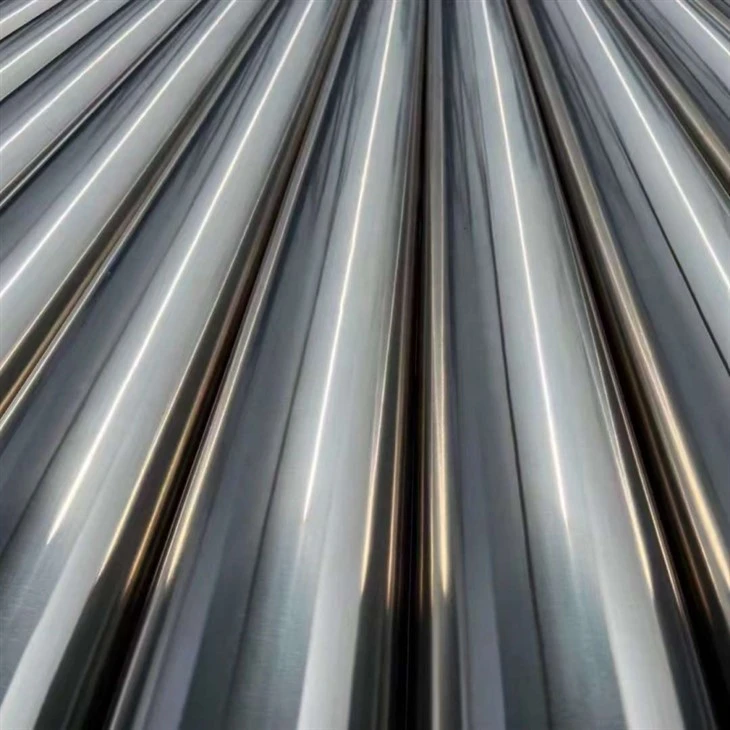

Another factor that contributes to the resistance of Alloy 925 Round Bar to stress - corrosion cracking is its microstructure. The alloy is carefully heat - treated to achieve a fine - grained microstructure. A fine - grained microstructure is more resistant to crack propagation than a coarse - grained one. When a crack starts to form in a material, it has to travel through the grains. In a fine - grained material, the grains are smaller, so the crack has to change direction more often as it propagates. This makes it more difficult for the crack to grow, and it effectively slows down the process of stress - corrosion cracking.
In addition to its chemical composition and microstructure, the manufacturing process of Alloy 925 Round Bar also plays a role in its resistance to stress - corrosion cracking. We use advanced rolling and forging techniques to ensure that the bar has a uniform structure and minimal residual stresses. Residual stresses can act as additional stress sources in the material, increasing the likelihood of stress - corrosion cracking. By minimizing these residual stresses during the manufacturing process, we can improve the overall performance of the Alloy 925 Round Bar.
Now, let's talk about some real - world applications where the stress - corrosion resistance of Alloy 925 Round Bar shines. In the oil and gas industry, for example, pipes and equipment are often exposed to harsh environments containing hydrogen sulfide, carbon dioxide, and saltwater. These conditions are perfect for stress - corrosion cracking to occur. Alloy 925 Round Bar can be used to make components such as valves, pumps, and shafts that need to withstand these corrosive environments and mechanical stresses.
In the marine industry, ships and offshore platforms are constantly in contact with seawater, which is a highly corrosive environment. Alloy 925 Round Bar is an ideal choice for making parts like propeller shafts, fasteners, and structural components. Its resistance to stress - corrosion cracking ensures that these parts can last a long time without failing, even in the harsh marine environment.
If you're in the market for a high - performance material that can resist stress - corrosion cracking, you might also be interested in checking out Bright Steel Rod and Inconel 625 Bar Stock. These are also great products with their own unique properties. But if you specifically need a material with excellent stress - corrosion resistance in a wide range of environments, Alloy 925 Round Bar is definitely worth considering.
We've been in the business of supplying Alloy 925 Round Bar for a long time, and we know the ins and outs of this product. We can provide you with high - quality bars in different sizes and specifications to meet your specific needs. Whether you're a small - scale manufacturer or a large - scale industrial company, we've got you covered.
If you're interested in learning more about Alloy 925 Round Bar or if you want to discuss your procurement needs, don't hesitate to reach out. We're here to answer your questions and help you find the right solution for your project.
References
- ASM Handbook Volume 13C: Corrosion: Environments and Industries.
- Metals Handbook Desk Edition, 3rd Edition.
- Various technical papers on nickel - based alloys and their corrosion resistance.