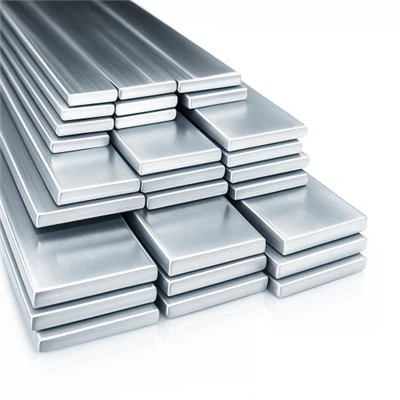
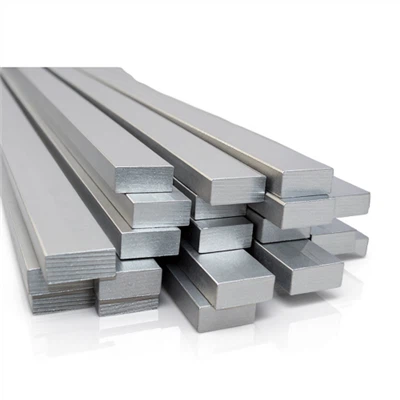
303 stainless steel is improved on the basis of 304 stainless steel sulfur-containing easy-to-cut steel, through the addition of sulfur (S), phosphorus (P) and other elements to optimise the cutting performance, while retaining the basic characteristics of austenitic stainless steel. Compared with ordinary stainless steel, 303 flat steel has outstanding advantages, such as the addition of sulfur elements significantly reduce tool wear, especially for automatic lathes, CNC machining and other high-speed cutting scenarios, which can improve machining efficiency by more than 30%. Stable performance in dry atmosphere, weak acid and alkali environment, meet the general industrial environment needs. Excellent cold working moulding ability, can make complex parts by stamping, bending and other processes. After polishing treatment, it can reach mirror effect, which is suitable for decorative parts.
Product Parameter (Specification)
Products description:
|
Product information |
Parameter |
Product intormation |
Parameter |
|
Product name |
Stainless steel round bar |
Standard |
ASTM, JIS, DIN, EN |
|
Length |
Customised to customer requirements |
Certification |
ISO, SGS |
|
Grade-ASTM |
201, 202,302, 303, 304, 304L, 310, 310S, 316, 316L, 321, 410, 431, 430F, 904L & other |
Price term |
FOB,CIF |
|
Technique |
Cold rolled hot rolled |
Payment terms |
T/T L/C |
|
Packaging and delivery |
|||
|
Note : bundle, plastic bags, thin film, wooden pallet, standard seaworthy export packing or as customer demands |
|||
Product Feature and Application
Precision Machinery Manufacturing
In the field of automation equipment and precision instruments, 303 stainless steel flat steel is widely used in the manufacture of high-precision, small tolerance core components:
Transmission system parts: such as gear shafts, cams, couplings, etc., its easy-to-cut characteristics can significantly shorten the machining cycle, reduce tool loss.
Valve components: ball valve spools, globe valve stems and other key parts, the medium corrosion resistance of the material can be adapted to water, steam and other media environment.
Pump body structural components: pump casing support moulded by cold bending or stamping process, taking into account the needs of light weight and strength.
01
Automotive Industry
The automotive industry has stringent requirements for wear resistance, processing efficiency and cost control of components, and the application of 303 flat steel covers a number of sub-systems:
Engine accessories: fuel injection system nozzles, sensor housings and other small parts that require precision turning.
Transmissions: Wear-resistant parts such as transmission synchronising rings, clutch pins, etc., which can be produced quickly in large batches due to the improved machinability of sulphur.
Fasteners: Bolts and gaskets for non-high-load environments, replacing some chrome-plated carbon steel parts to reduce weight.
Technical advantage: material ductility supports cold heading process to meet the automotive industry's need for one-off forming of complex shaped parts.
02
Food Processing Equipment
In the food industry, although 303 flat steel is not in direct contact with food, it performs well in the following scenarios:
Conveyor systems: conveyor belt supports, sorting robotic arms, the material is resistant to weak acids and alkalis characteristics to adapt to the environment of frequent rinsing of cleaning agents.
Packaging machinery: mould guide posts, cutter bases, high hardness and wear resistance to extend the life of the equipment.
Temperature control device: oven lining bracket, freezing equipment frame, maintain dimensional stability in the temperature range of -50 ℃ ~ 300 ℃.
Technical advantages: passivation treatment can further enhance the surface corrosion resistance, in line with GB 4806.9 food safety mechanical material specifications.
03
Electronics and Semiconductors
The miniaturisation trend of electronic components puts higher demands on material processing accuracy:
Connector terminals: SIM card slot, Type-C interface metal parts, precision stamping and moulding to ensure signal transmission stability.
Heat sink module: LED lamp substrate, chip heat sink, moderate thermal conductivity and easy to process complex fin structure.
Precision moulds: injection mould inserts, jig positioning blocks, material hardness HRB 85-90 to ensure long-term use without deformation.
Technical advantage: support micron-level precision etching process, suitable for the ultra-thin design needs of optoelectronic devices.
04
Energy Equipment
In energy extraction and power equipment, 303 flat steel is used in non-extreme corrosion scenarios:
Oil and gas drilling: instrumentation valve housings, sensor sheaths for moderately corrosive downhole media.
Wind power equipment: internal nacelle brackets, junction box fixings, lightweight design to reduce tower loads.
Nuclear auxiliary systems: cooling pipe supports, maintenance tools, low magnetic properties of the material to avoid interference with precision instruments.
Technical advantage: the hardness of the material can be adjusted through heat treatment to meet the mechanical properties required under different loading conditions.
05
Production Details
303 stainless steel is based on 304 stainless steel with the addition of sulfur (S) and phosphorus (P) to improve the cutting performance of easy-to-cut austenitic stainless steel. Its standard chemical composition is as follows:
1.Major Elements:
|
Element |
Chromium (Cr) |
Nickel (Ni) |
Carbon (C) |
Manganese (Mn) |
silicon (Si) |
sulfur (S) |
phosphorus (P) |
|
Content(%) |
17-19 |
8-10 |
MAX 0.15 |
MAX 2 |
MAX 1 |
0.15-0.35 |
MAX 0.20 |
2.Mechanical properties
|
Condition |
Tensile strength (MPa) |
Yield strength (MPa) |
Elongation (%) |
Hardness (HB) |
|
Data |
≥500 |
≥190 |
≥40 |
≤187 |
3.Physical properties
|
Condition |
Density |
Melting point |
Thermal conductivity |
Resistivity |
|
Data |
7.93 g/cm³ |
1400-1450°C |
16.3 W/m-K (at 100℃) |
0.72 Ω-m |
4.Temperature resistance characteristics
Long-term working temperature: -20℃~+400℃, short-term up to +800℃, but will oxidise.
Low temperature properties: maintain toughness to -196℃, no brittle transformation.
High temperature attention: Above 500℃, carbides may precipitate at grain boundaries, need to avoid sensitisation interval 450~850℃. Sulfur (S) may cause thermal embrittlement at high temperatures, avoid hot forging or welding.
Product specifications and forms
|
Item |
Parameter range |
Description |
|
Material grade |
304 (06Cr19Ni10) |
Conformity standard: GB/T 1220-2007 (national standard), ASTM A240/A240M (American standard). |
|
Cross-section shape |
Rectangle |
Thickness and width of the combination of different specifications, edges can be right-angled or rounded processing |
|
Thickness (mm) |
3 ~ 20 |
Common thickness: 3, 5, 6, 8, 10, 12, 15, 20 (can be customised non-standard size) |
|
Width (mm) |
20 ~ 200 |
Common width: 20, 30, 40, 50, 60, 80, 100, 120, 150, 200 (on request) |
|
Length (m) |
1 ~ 6 |
Commonly specified size is 6 metres, support section cutting or special length customisation |
|
Surface condition |
2B, BA, No.4, brushed, sandblasted, etc. |
2B (cold rolled bright), BA (mirror), No.4 (brushed) is commonly used in industry, and the decorative scene can be polished or colour-plated treatment. |
Surface treatment options
|
Type |
Description |
Applicable Scene |
|
Pickled surface |
Matte grey-white, remove oxide skin |
General industrial parts, subsequent processing |
|
Polished surface |
Mechanically polished to Ra≤0.8μm (mirror surface) |
Medical devices, food equipment |
|
Grinding surface |
Precision grinding, dimensional tolerance ±0.02mm |
Shafts, precision parts |
FAQ
Packaging Display

Hot Tags: 303 stainless steel flat bar, China 303 stainless steel flat bar manufacturers, suppliers, factory