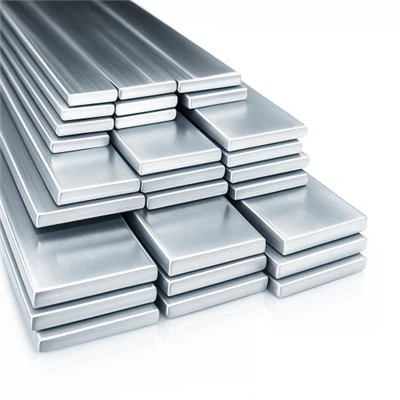
Hey there! As a supplier of stainless flat wire, I often get asked about the thermal expansion coefficient of this product. It's a crucial property, especially for those who use stainless flat wire in applications where temperature changes are a factor. So, let's dive right in and explore what the thermal expansion coefficient of stainless flat wire is all about.
First off, what exactly is the thermal expansion coefficient? Well, it's a measure of how much a material expands or contracts when its temperature changes. In simple terms, when you heat up a material, its atoms start to move around more vigorously, causing the material to expand. Conversely, when you cool it down, the atoms slow down, and the material contracts. The thermal expansion coefficient tells you how much this expansion or contraction will be for a given change in temperature.
Now, let's talk about stainless flat wire specifically. Stainless steel is an alloy, which means it's made up of different elements like iron, chromium, nickel, and others. The exact composition of the stainless steel can vary, and this affects its thermal expansion coefficient. There are different grades of stainless steel, and each grade has its own unique set of properties, including the thermal expansion coefficient.
One of the most common grades of stainless steel used for flat wire is 304 stainless steel. 304 Stainless Steel Spring Wire is known for its good corrosion resistance and mechanical properties. The thermal expansion coefficient of 304 stainless steel is approximately 17.2 x 10^-6 /°C (at 20 - 100°C). This means that for every degree Celsius increase in temperature, a 1-meter length of 304 stainless flat wire will expand by about 0.0000172 meters, or 0.0172 millimeters.
Another popular grade is 304L stainless steel. 304L Stainless Steel Wire is a low-carbon version of 304 stainless steel, which makes it even more resistant to corrosion, especially in welded applications. The thermal expansion coefficient of 304L is very similar to that of 304, around 17.3 x 10^-6 /°C (at 20 - 100°C). So, in terms of thermal expansion, 304L and 304 stainless flat wires behave quite similarly.
Then there's 403 stainless steel. 403 Stainless Steel Spring Wire is a ferritic stainless steel, which has different properties compared to the austenitic 304 and 304L grades. The thermal expansion coefficient of 403 stainless steel is lower, approximately 10.4 x 10^-6 /°C (at 20 - 100°C). This means that 403 stainless flat wire will expand less than 304 or 304L when the temperature changes.
Why does the thermal expansion coefficient matter? Well, in many applications, it's essential to know how the material will behave under different temperature conditions. For example, if you're using stainless flat wire in a precision instrument or a mechanical device, even a small amount of expansion or contraction can affect the performance of the device. If the thermal expansion is not taken into account, it could lead to misalignments, stress on the components, or even failure of the device.
Let's say you're using stainless flat wire in a spring application. Springs are designed to have a specific stiffness and deflection characteristics. When the temperature changes, the thermal expansion of the wire can change the dimensions of the spring, which in turn affects its stiffness and deflection. This can be a big problem if the spring is part of a critical system, like a valve in an engine or a sensor in a control system.
On the other hand, in some applications, the thermal expansion of the stainless flat wire can be used to an advantage. For example, in a thermal actuator, the expansion and contraction of the wire can be used to create movement or apply force. By carefully selecting the grade of stainless steel with the appropriate thermal expansion coefficient, you can design a thermal actuator that works effectively over a wide range of temperatures.
As a supplier of stainless flat wire, I understand the importance of providing accurate information about the thermal expansion coefficient to my customers. That's why we always test our products to ensure that they meet the specified properties. We also work closely with our customers to understand their specific requirements and recommend the right grade of stainless flat wire for their applications.
If you're in the market for stainless flat wire and need to know more about the thermal expansion coefficient or other properties, don't hesitate to reach out. We're here to help you make the right choice for your project. Whether you need a small quantity for a prototype or a large volume for mass production, we can provide you with high-quality stainless flat wire at competitive prices.
In conclusion, the thermal expansion coefficient of stainless flat wire is an important property that can have a significant impact on its performance in different applications. By understanding the thermal expansion characteristics of different grades of stainless steel, you can make informed decisions when selecting the right material for your project. So, if you have any questions or need more information, feel free to contact us. We're looking forward to working with you and helping you find the perfect stainless flat wire solution.

References
- ASM Handbook Volume 1: Properties and Selection: Irons, Steels, and High-Performance Alloys
- Stainless Steel World Magazine articles on stainless steel properties