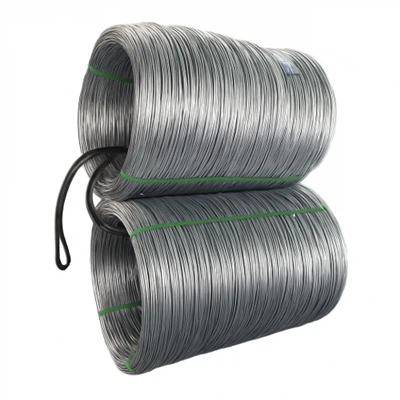
Hey there! As a supplier of 302 Stainless Round Bar, I often get asked about the surface roughness of this product. So, I thought I'd write this blog to give you all the deets on what surface roughness is, why it matters for 302 stainless round bars, and how it can impact your projects.
First off, let's talk about what surface roughness actually means. In simple terms, surface roughness refers to the texture of a material's surface. It's all about those tiny bumps, valleys, and irregularities that you can't always see with the naked eye but can have a big impact on how the material performs. Surface roughness is usually measured in micrometers (μm) or micro - inches (μin), and it gives you an idea of how smooth or rough the surface of the 302 stainless round bar is.
Now, you might be wondering why surface roughness is such a big deal when it comes to 302 stainless round bars. Well, there are several reasons. For starters, the surface roughness can affect the corrosion resistance of the bar. A smoother surface generally has fewer areas where corrosive agents can collect and cause damage. So, if you're using the 302 stainless round bar in an environment where corrosion is a concern, like in a marine setting or a chemical plant, a lower surface roughness can be a real advantage.
Another important factor is the aesthetic appeal. In applications where the appearance of the bar matters, such as in architectural or decorative projects, a smooth surface can give the bar a more polished and professional look. No one wants a rough - looking bar when they're trying to create a sleek and modern design, right?
The surface roughness also plays a role in the bar's friction and wear characteristics. If the bar is going to be used in a mechanical system where it rubs against other parts, a smoother surface can reduce friction and wear, which in turn can increase the lifespan of the bar and the overall efficiency of the system.
So, how do we measure the surface roughness of a 302 stainless round bar? There are a few different methods, but one of the most common is using a profilometer. A profilometer is a device that measures the height variations on the surface of the bar. It moves a stylus across the surface and records the changes in height, which are then used to calculate the surface roughness parameters.
There are several parameters used to describe surface roughness, but two of the most important ones are Ra and Rz. Ra, or the arithmetic average roughness, is the average of the absolute values of the height deviations from the mean line of the surface profile. Rz, or the maximum height of the profile, is the difference between the highest peak and the lowest valley within a sampling length.
When it comes to 302 stainless round bars, the typical surface roughness values can vary depending on the manufacturing process and the intended application. For bars that are going to be used in general engineering applications, an Ra value of around 0.8 - 3.2 μm is common. If the bar is going to be used in a more demanding application, like in a high - precision machinery or a food - processing environment, a lower Ra value, say around 0.2 - 0.8 μm, might be required.
Now, let's compare the surface roughness of 302 stainless round bars with some other types of stainless steel round bars. For example, the 316 Round Bar is another popular choice. 316 stainless steel is known for its excellent corrosion resistance, especially in marine environments. In terms of surface roughness, 316 round bars can have similar values to 302 round bars, but the exact values will depend on the manufacturing process and the specific requirements of the application.
Another type of stainless steel round bar is the 430f Stainless Steel Round Bar. 430f stainless steel is a free - machining grade, which means it's easier to cut and shape. The surface roughness of 430f round bars can also vary, but they might have slightly different characteristics compared to 302 and 316 round bars due to the different alloy composition and machining properties.


As a supplier of 302 Stainless Round Bar, I understand that getting the right surface roughness is crucial for your projects. That's why we take great care in the manufacturing process to ensure that our bars meet the required surface roughness standards. We use advanced manufacturing techniques and quality control measures to make sure that each bar we supply has the right surface finish.
If you're in the market for 302 stainless round bars and have specific surface roughness requirements, don't hesitate to reach out. We can work with you to understand your needs and provide you with the best possible product. Whether you're working on a small DIY project or a large - scale industrial application, we've got you covered.
In conclusion, surface roughness is an important characteristic of 302 stainless round bars. It can affect the bar's corrosion resistance, aesthetic appeal, friction, and wear characteristics. By understanding the different surface roughness parameters and how they relate to your application, you can make an informed decision when choosing the right 302 stainless round bar for your project.
If you have any questions or want to discuss your requirements further, feel free to get in touch. We're here to help you find the perfect 302 stainless round bar for your needs.
References
- ASME B46.1 - Surface Texture (Surface Roughness, Waviness, and Lay)
- ISO 4287 - Geometrical Product Specifications (GPS) - Surface texture: Profile method - Terms, definitions and surface texture parameters