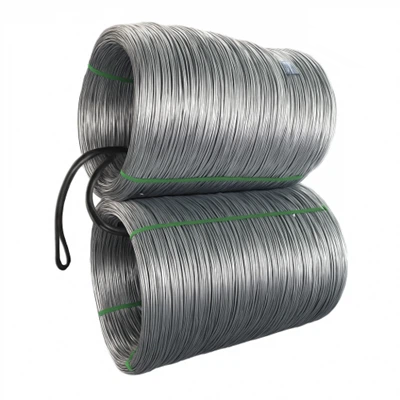
316 round bars are widely used in various industries due to their excellent corrosion resistance, high-temperature strength, and good formability. As a 316 round bar supplier, I often get asked about the standards for these bars. In this blog post, I'll break down the key standards that you should know when it comes to 316 round bars.
Chemical Composition Standards
The chemical composition of 316 round bars is crucial as it determines many of their properties. The main elements in 316 stainless steel include chromium (Cr), nickel (Ni), molybdenum (Mo), carbon (C), silicon (Si), manganese (Mn), phosphorus (P), and sulfur (S).
- Chromium (Cr): It typically ranges from 16% to 18%. Chromium is responsible for forming a passive oxide layer on the surface of the steel, which provides corrosion resistance.
- Nickel (Ni): The nickel content is around 10% to 14%. Nickel enhances the ductility and toughness of the steel, and also improves its resistance to corrosion in certain environments.
- Molybdenum (Mo): With a content of about 2% to 3%, molybdenum significantly improves the pitting and crevice corrosion resistance of 316 stainless steel, especially in chloride-containing environments.
- Carbon (C): The carbon content is usually limited to a maximum of 0.08%. Lower carbon levels help prevent the formation of chromium carbides during welding, which can lead to a loss of corrosion resistance in the heat-affected zone.
- Silicon (Si): The silicon content is generally kept below 1%. Silicon acts as a deoxidizer during the steelmaking process and can also improve the oxidation resistance of the steel.
- Manganese (Mn): Manganese is present in amounts up to 2%. It helps to improve the hot workability of the steel.
- Phosphorus (P) and Sulfur (S): These are considered impurities, and their content is typically restricted to a maximum of 0.045% and 0.03% respectively. High levels of P and S can reduce the ductility and corrosion resistance of the steel.
Mechanical Property Standards
The mechanical properties of 316 round bars are also important for different applications. Here are some of the key mechanical properties and their standard values:
- Tensile Strength: The minimum tensile strength of 316 round bars is usually around 515 MPa (75,000 psi). Tensile strength is the maximum stress that a material can withstand while being stretched or pulled before breaking.
- Yield Strength: The minimum yield strength is about 205 MPa (30,000 psi). Yield strength is the stress at which a material begins to deform plastically, meaning it will not return to its original shape after the stress is removed.
- Elongation: The elongation at break is typically required to be at least 40%. Elongation measures the percentage increase in length of a material before it breaks under tension, indicating its ductility.
- Hardness: The hardness of 316 round bars can vary depending on the heat treatment and cold working. Generally, the Brinell hardness is around 217 HB max, and the Rockwell hardness is about B95 max.
Dimensional and Tolerance Standards
When it comes to the dimensions of 316 round bars, there are specific standards regarding diameter, length, and straightness.

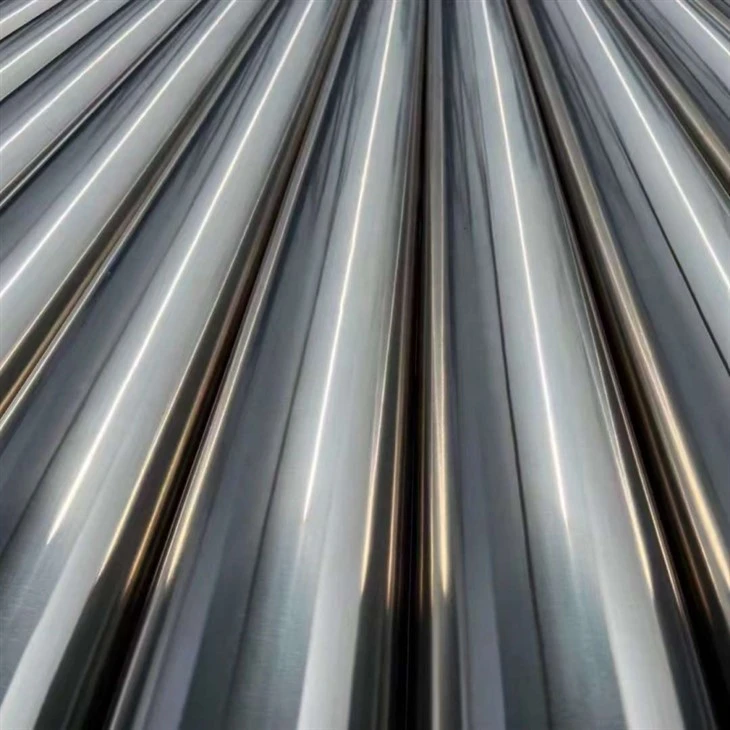
- Diameter: The diameter of 316 round bars can range from a few millimeters to several inches. The tolerance for diameter is usually specified according to the relevant standards, such as ASTM (American Society for Testing and Materials) or EN (European Norms). For example, in ASTM A276, the diameter tolerance for hot-rolled bars is typically ± 0.8% to ± 1.2% depending on the size, while for cold-finished bars, the tolerance can be much tighter.
- Length: The standard lengths of 316 round bars can vary, but common lengths are 6 meters (20 feet) or 12 meters (40 feet). There may also be some tolerance for length, usually within a few millimeters.
- Straightness: The bars should be reasonably straight. The straightness tolerance is often defined in terms of the maximum deviation from a straight line over a certain length. For example, in some standards, the maximum deviation over a 1-meter length may be limited to 2 to 3 millimeters.
Surface Finish Standards
The surface finish of 316 round bars is important for both aesthetic and functional reasons. There are different types of surface finishes available, and the standards for each type vary.
- Hot-Rolled Finish: Hot-rolled 316 round bars have a rough, scale-covered surface. The scale is formed during the hot-rolling process and can be removed by pickling or other surface treatment methods. The surface roughness of hot-rolled bars is typically in the range of Ra 25 to 100 µm.
- Cold-Finished Finish: Cold-finished bars have a smoother surface compared to hot-rolled bars. They are often produced by processes such as cold drawing or turning. The surface roughness of cold-finished bars can be as low as Ra 0.8 to 3.2 µm, depending on the specific requirements.
- Polished Finish: For applications where a high-quality, shiny surface is required, 316 round bars can be polished to different levels of smoothness. The most common polished finishes are #2B (a smooth, semi-bright finish), #3 (a coarse polished finish), #4 (a medium polished finish), and #8 (a mirror-like finish).
Comparison with Other Round Bars
It's also interesting to compare 316 round bars with other types of round bars. For example, Bright Steel Rod is known for its smooth and shiny surface, which is achieved through a cold finishing process. While 316 round bars offer excellent corrosion resistance, bright steel rods may be more suitable for applications where appearance and precise dimensions are crucial.
420 Stainless Steel Round Bar has a higher carbon content compared to 316, which gives it higher hardness and strength. However, its corrosion resistance is not as good as 316, especially in chloride-containing environments. So, 420 round bars are often used in applications where wear resistance is more important than corrosion resistance.
Alloy 925 Round Bar is a high-nickel alloy that offers excellent resistance to high-temperature corrosion and oxidation. It is more expensive than 316 round bars and is typically used in applications in the aerospace, chemical processing, and power generation industries where extreme conditions are present.
Conclusion
Understanding the standards for 316 round bars is essential when you're looking to purchase them for your specific applications. By knowing the chemical composition, mechanical properties, dimensional tolerances, and surface finish requirements, you can ensure that you're getting the right product for your needs.
If you're in the market for 316 round bars, don't hesitate to reach out. I'm here to help you find the best solution for your project. Whether you need a small quantity for a prototype or a large order for a production run, I can provide high-quality 316 round bars that meet the relevant standards. Contact me for a quote and start discussing your requirements today.
References
- ASTM A276: Standard Specification for Stainless Steel Bars and Shapes
- EN 10088: Stainless steels - Technical delivery conditions
- Metals Handbook, Volume 1: Properties and Selection: Irons, Steels, and High-Performance Alloys