What are the international standards for bright steel rod?
As a seasoned supplier of bright steel rods, I've witnessed firsthand the critical role that international standards play in the industry. Bright steel rods are widely used in various sectors, including automotive, construction, and manufacturing, due to their excellent surface finish, dimensional accuracy, and mechanical properties. In this blog post, I'll delve into the key international standards for bright steel rods, their significance, and how they impact our business as a supplier.
Understanding Bright Steel Rods
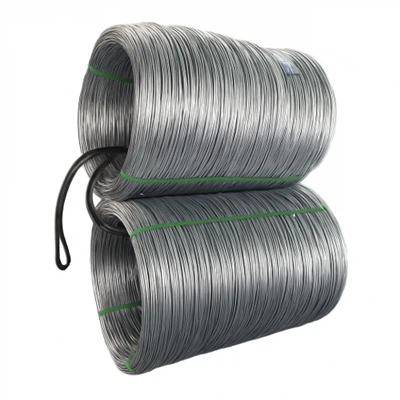
Before we explore the international standards, let's briefly understand what bright steel rods are. Bright steel rods are produced through a process that involves cold drawing or polishing, resulting in a smooth and shiny surface finish. This process not only enhances the appearance of the rods but also improves their dimensional accuracy and mechanical properties. Bright steel rods are available in various grades and sizes, making them suitable for a wide range of applications.
Key International Standards for Bright Steel Rods
There are several international standards that govern the production and quality of bright steel rods. These standards ensure that the rods meet specific requirements in terms of chemical composition, mechanical properties, surface finish, and dimensional accuracy. Some of the most widely recognized international standards for bright steel rods include:
- ISO Standards: The International Organization for Standardization (ISO) develops and publishes standards that are recognized worldwide. ISO standards for bright steel rods cover a wide range of aspects, including chemical composition, mechanical properties, and dimensional tolerances. For example, ISO 683-17 specifies the requirements for alloy steels and free-cutting steels used in the production of bright steel rods.
- ASTM Standards: The American Society for Testing and Materials (ASTM) is another leading organization that develops and publishes standards for various materials, including bright steel rods. ASTM standards are widely used in the United States and other countries. ASTM A108, for instance, covers the requirements for carbon steel bars, including bright steel rods, for high-strength and heat-treated applications.
- EN Standards: The European Committee for Standardization (CEN) develops and publishes standards that are applicable in the European Union and other European countries. EN standards for bright steel rods are similar to ISO standards but may have some regional variations. EN 10277, for example, specifies the requirements for bright steel bars, including bright steel rods, in terms of chemical composition, mechanical properties, and dimensional tolerances.
Significance of International Standards
International standards for bright steel rods are of utmost importance for several reasons:
- Quality Assurance: By adhering to international standards, manufacturers can ensure that their bright steel rods meet specific quality requirements. This helps to maintain consistency in the production process and ensures that the rods perform as expected in various applications.
- Interoperability: International standards promote interoperability between different manufacturers and suppliers. This means that bright steel rods produced in different countries can be used interchangeably, provided they meet the same international standards. This facilitates global trade and reduces the need for custom-made products.
- Safety: International standards also play a crucial role in ensuring the safety of bright steel rods. By specifying the requirements for chemical composition, mechanical properties, and surface finish, standards help to prevent the use of substandard materials that could pose a risk to human health and the environment.
- Market Access: Compliance with international standards is often a prerequisite for accessing certain markets. Many countries and industries have specific requirements for the quality and safety of products, and manufacturers must ensure that their bright steel rods meet these requirements to enter these markets.
Impact on Our Business as a Supplier
As a supplier of bright steel rods, we understand the importance of international standards and strive to ensure that our products meet or exceed these standards. By adhering to international standards, we can offer our customers high-quality bright steel rods that are reliable, safe, and suitable for a wide range of applications.
In addition to ensuring product quality, international standards also help us to differentiate ourselves from our competitors. By demonstrating our commitment to quality and compliance, we can build trust with our customers and establish ourselves as a reliable supplier in the market.
We also use international standards as a benchmark for continuous improvement. By regularly reviewing and updating our production processes and quality control measures, we can ensure that our bright steel rods remain competitive in terms of quality, performance, and cost.
Examples of Bright Steel Rods Meeting International Standards
To illustrate the importance of international standards, let's take a look at some examples of bright steel rods that meet these standards:


- 430 Stainless Steel Round Bar: This bright steel rod is made from 430 stainless steel, which is a ferritic stainless steel known for its excellent corrosion resistance and good mechanical properties. The rod meets the requirements of international standards such as ISO 683-17 and ASTM A276, ensuring its quality and performance.
- 430 ss round bar: Similar to the 430 stainless steel round bar, the 430 ss round bar is also made from 430 stainless steel and meets the requirements of international standards. It is commonly used in applications where corrosion resistance and good mechanical properties are required, such as in the automotive and construction industries.
- 420 Stainless Steel Round Bar: This bright steel rod is made from 420 stainless steel, which is a martensitic stainless steel known for its high strength and good corrosion resistance. The rod meets the requirements of international standards such as ISO 683-17 and ASTM A276, making it suitable for a wide range of applications, including cutlery, surgical instruments, and industrial equipment.
Conclusion
In conclusion, international standards for bright steel rods are essential for ensuring the quality, safety, and interoperability of these products. By adhering to these standards, manufacturers can produce high-quality bright steel rods that meet the specific requirements of various applications. As a supplier of bright steel rods, we are committed to meeting or exceeding international standards and providing our customers with reliable and high-performance products.
If you are interested in purchasing bright steel rods or have any questions about our products, please feel free to contact us. We would be happy to discuss your requirements and provide you with a customized solution.
References
- International Organization for Standardization (ISO). ISO 683-17:2014. Heat-treatable steels, alloy steels and free-cutting steels - Part 17: Steels for quenching and tempering.
- American Society for Testing and Materials (ASTM). ASTM A108/A108M-19. Standard Specification for Carbon Steel Bars, Cold-Finished, for High-Strength and Heat-Treated Applications.
- European Committee for Standardization (CEN). EN 10277-3:2008. Bright steel products - Technical delivery conditions - Part 3: Free-cutting steels.