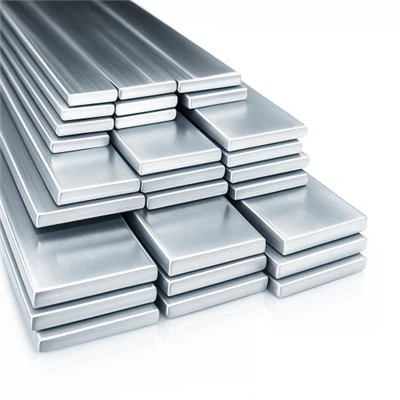
Hey there! I'm a supplier of stainless steel bars, and I'm super stoked to take you on a journey through the fascinating process of how these awesome bars are made. Stainless steel bars are everywhere, from construction sites to high - tech machinery, and knowing how they're produced gives you a whole new appreciation for them.
Starting with the Raw Materials
First things first, we need to gather the raw materials. Stainless steel is mainly made up of iron, chromium, and a few other elements. Iron is the base metal, and it's usually sourced from iron ore. Chromium is what gives stainless steel its corrosion - resistant properties. We also throw in some nickel, manganese, and molybdenum depending on the type of stainless steel we want to make.
The iron ore is mined from the earth, and then it goes through a process called smelting. In a huge furnace, the iron ore is heated up with coke (a form of carbon) and limestone. The coke burns, providing the heat needed to melt the ore, and the limestone helps to remove impurities. This results in molten iron, which is the starting point for our stainless steel.
Melting and Alloying
Once we have the molten iron, it's time to add the other elements to turn it into stainless steel. We do this in an electric arc furnace or a basic oxygen furnace. In an electric arc furnace, electrodes create an arc of electricity that generates intense heat, melting the iron and allowing us to add the precise amounts of chromium, nickel, and other elements.
For example, if we're making 303 Stainless Steel Round Bar, we'll add specific proportions of sulfur and phosphorus to improve its machinability. The alloying process is crucial because it determines the properties of the final stainless steel, like its strength, corrosion resistance, and heat resistance.
Refining the Molten Metal
After the alloying process, the molten stainless steel isn't perfect yet. It still contains some impurities that could affect its quality. So, we refine it. One common method is the argon - oxygen decarburization (AOD) process. In this process, a mixture of argon and oxygen is blown into the molten steel. The oxygen reacts with the carbon in the steel to form carbon monoxide, which is then removed. The argon helps to prevent the oxidation of other important elements in the steel.
Another refining method is vacuum oxygen decarburization (VOD). In a vacuum chamber, oxygen is blown into the molten steel, and the low pressure helps to remove carbon and other volatile impurities. These refining processes ensure that the stainless steel has the right chemical composition and is of high quality.
Casting the Stainless Steel
Once the molten stainless steel is refined, it's time to cast it into a shape. There are two main casting methods: ingot casting and continuous casting.
In ingot casting, the molten steel is poured into large molds called ingots. These ingots are then allowed to cool and solidify. After that, they can be further processed into bars. Ingot casting is great for making large, heavy - duty bars.
Continuous casting, on the other hand, is a more modern and efficient method. The molten steel is poured into a water - cooled mold, and as it starts to solidify, it is continuously pulled out of the mold in a long, semi - solid strand. This strand can then be cut into smaller pieces for further processing. Continuous casting is faster and produces more uniform products.
Forming the Bars
After casting, we have a semi - finished product that needs to be formed into bars. There are several ways to do this.
One common method is hot rolling. In hot rolling, the cast stainless steel is heated to a very high temperature and then passed through a series of rollers. These rollers gradually reduce the thickness and shape of the steel into bars. Hot rolling makes the steel more malleable, and it also helps to improve its internal structure, making it stronger.
Another method is cold rolling. Cold rolling is done at room temperature. It's used to produce bars with a more precise dimension and a smoother surface finish. The bars are passed through rollers under high pressure, which compresses the steel and gives it a better appearance. Cold - rolled bars are often used in applications where aesthetics and tight tolerances are important.
Heat Treatment
Heat treatment is an important step in the production of stainless steel bars. It helps to improve the mechanical properties of the bars, such as their hardness, toughness, and ductility.
One common heat - treatment process is annealing. In annealing, the bars are heated to a specific temperature and then slowly cooled. This relieves internal stresses in the steel and makes it more ductile. Annealed bars are easier to machine and form.
Quenching and tempering are also used in some cases. Quenching involves heating the bars to a high temperature and then rapidly cooling them in a quenching medium, like water or oil. This makes the steel very hard. Tempering is then done to reduce the brittleness caused by quenching. The bars are heated to a lower temperature and held there for a period of time, which improves their toughness.
Surface Finishing
After heat treatment, the bars may need some surface finishing. This can involve processes like grinding, polishing, or pickling.
Grinding is used to remove any rough edges or surface irregularities on the bars. It gives the bars a smooth and uniform surface. Polishing, on the other hand, is used to create a shiny, mirror - like finish. It's often used for decorative applications.
Pickling is a chemical process that removes any scale or oxidation from the surface of the bars. The bars are immersed in an acid solution, which dissolves the unwanted surface layer and leaves a clean, corrosion - resistant surface.
Quality Control
Throughout the entire production process, quality control is crucial. We use a variety of methods to ensure that our stainless steel bars meet the highest standards.
We perform chemical analysis to check the composition of the steel. This ensures that the right amounts of elements are present and that the steel has the desired properties. We also do mechanical testing, such as tensile testing, hardness testing, and impact testing. These tests measure the strength, hardness, and toughness of the bars.
Non - destructive testing methods, like ultrasonic testing and magnetic particle testing, are used to detect any internal flaws or defects in the bars. Only bars that pass all these quality - control tests are sent out to our customers.
Other Related Stainless Steel Products
Apart from the standard bars, we also offer other related stainless steel products. For example, Stainless Steel Channel Sections are widely used in construction and engineering. They have a unique shape that provides excellent structural support.
We also supply 316 Stainless Steel Wire. This wire is known for its high corrosion resistance, making it suitable for marine and chemical applications.
Why Choose Our Stainless Steel Bars
As a supplier, we take pride in our products. Our stainless steel bars are made using the latest technology and the highest - quality raw materials. We have strict quality - control measures in place to ensure that every bar we produce meets or exceeds industry standards.
We offer a wide range of sizes and grades of stainless steel bars to meet the diverse needs of our customers. Whether you're in the construction, manufacturing, or automotive industry, we have the right bar for you. And our experienced team is always ready to provide you with technical support and advice.


Let's Talk Business
If you're in the market for high - quality stainless steel bars, we'd love to hear from you. Whether you have a small project or a large - scale order, we can work with you to find the best solution. Contact us today to discuss your requirements, and let's start a great business relationship.
References
- ASM Handbook Committee. (2004). ASM Handbook, Volume 1: Properties and Selection: Irons, Steels, and High - Performance Alloys. ASM International.
- Kalpakjian, S., & Schmid, S. R. (2008). Manufacturing Engineering and Technology. Pearson Prentice Hall.