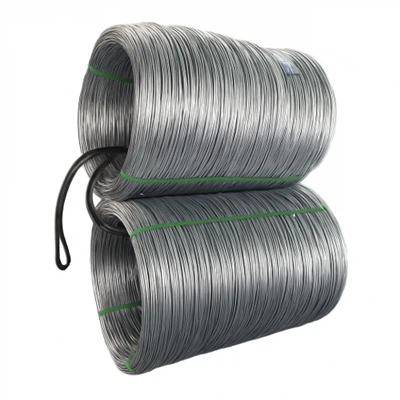
Hey there! As a supplier of stainless flat wire, I often get asked about the pitting potential of stainless flat wire. So, I thought I'd take a few minutes to break it down for you.
First off, let's talk about what pitting corrosion is. Pitting corrosion is a form of localized corrosion that occurs when small holes or pits form on the surface of a metal. This can happen when the protective oxide layer on the surface of the stainless steel is damaged, allowing the underlying metal to come into contact with corrosive substances.
The pitting potential of stainless flat wire is the minimum potential at which pitting corrosion can occur. It's an important factor to consider when choosing stainless flat wire for applications where corrosion resistance is critical. A higher pitting potential means that the wire is more resistant to pitting corrosion.
Now, you might be wondering what factors affect the pitting potential of stainless flat wire. Well, there are a few key factors to keep in mind.
Chemical Composition
The chemical composition of the stainless steel plays a huge role in its pitting potential. Stainless steels are typically made up of iron, chromium, nickel, and other alloying elements. Chromium is especially important because it forms a thin, protective oxide layer on the surface of the steel, which helps prevent corrosion. The higher the chromium content, the better the pitting resistance.
For example, 316L Stainless Steel Wire [2] contains more molybdenum than 304 Stainless Steel Spring Wire [1]. Molybdenum is another alloying element that significantly enhances the pitting resistance of stainless steel. So, in general, 316L has a higher pitting potential and is more suitable for applications in harsh, corrosive environments.
On the other hand, 204Cu Stainless Steel Wire [3] has a different chemical composition. It contains copper, which can improve its formability and also contribute to its corrosion resistance in certain conditions. However, its pitting potential might not be as high as 316L in extremely corrosive settings.
Surface Finish
The surface finish of the stainless flat wire also impacts its pitting potential. A smooth surface finish is less likely to trap corrosive substances, which means it's more resistant to pitting. When the surface is rough, it can create crevices where corrosive agents can accumulate, increasing the risk of pitting corrosion.
During the manufacturing process, we take great care to ensure that our stainless flat wires have a smooth surface finish. This involves processes like cold drawing and polishing, which help to refine the surface and reduce the chances of pitting.
Environmental Conditions
The environment in which the stainless flat wire is used is a major factor. If the wire is exposed to chloride ions, such as in saltwater or some industrial chemicals, it's more likely to experience pitting corrosion. Chloride ions can break down the protective oxide layer on the surface of the stainless steel, making it vulnerable to pitting.
Temperature also plays a role. Higher temperatures can accelerate the corrosion process, reducing the pitting potential of the wire. So, if the wire is going to be used in a high - temperature and corrosive environment, it's crucial to choose a stainless steel with a high pitting potential.
Heat Treatment
Heat treatment can alter the microstructure of the stainless steel, which in turn affects its pitting potential. Proper heat treatment can improve the uniformity of the alloy and enhance its corrosion resistance. For example, annealing can relieve internal stresses in the wire and make it more resistant to pitting.
We have a strict heat - treatment process in place to ensure that our stainless flat wires have the optimal microstructure for corrosion resistance. This involves carefully controlling the heating and cooling rates to achieve the desired properties.
Measuring Pitting Potential
There are several methods to measure the pitting potential of stainless flat wire. One common method is electrochemical testing. In this test, a sample of the wire is immersed in an electrolyte solution, and an electric potential is applied. The potential at which pitting starts to occur is then measured.
Another method is immersion testing, where the wire is immersed in a corrosive solution for a certain period of time, and then its surface is examined for signs of pitting. These tests help us to ensure that our stainless flat wires meet the required standards for pitting resistance.
Why Pitting Potential Matters
Understanding the pitting potential of stainless flat wire is crucial for our customers. If you're using the wire in an application where corrosion could lead to failure, such as in marine equipment, chemical processing plants, or food - processing machinery, choosing a wire with a high pitting potential is essential.
For example, in a marine environment, the saltwater contains a high concentration of chloride ions. If the stainless flat wire used in a boat's rigging or a seawater pump has a low pitting potential, it could start to pit and corrode over time, which could compromise its structural integrity.


In a food - processing plant, the wire might come into contact with acidic or salty foods, as well as cleaning chemicals. A wire with a high pitting potential will be more resistant to corrosion from these substances, ensuring that it doesn't contaminate the food and that it has a long service life.
Choosing the Right Stainless Flat Wire
When you're looking to buy stainless flat wire, it's important to consider its pitting potential based on your specific application. If you're working in a mildly corrosive environment, 304 Stainless Steel Spring Wire [1] might be a good choice. It's cost - effective and has decent corrosion resistance in many common settings.
However, if you're dealing with a highly corrosive environment, such as in a chemical plant or offshore oil rig, 316L Stainless Steel Wire [2] would be a better option. Its higher pitting potential makes it more suitable for these harsh conditions.
If you need a wire with good formability and corrosion resistance in less extreme conditions, 204Cu Stainless Steel Wire [3] could be considered.
We're here to help you make the right choice. Our team of experts can provide you with detailed information about the pitting potential of our different stainless flat wires and recommend the best option for your needs.
Conclusion
In conclusion, the pitting potential of stainless flat wire is a complex but important concept. It's influenced by factors like chemical composition, surface finish, environmental conditions, heat treatment, and more. By understanding these factors, you can make an informed decision when choosing stainless flat wire for your applications.
If you're in the market for high - quality stainless flat wire and need more information about pitting potential or any other properties, don't hesitate to reach out to us. We're always happy to assist you in finding the perfect wire for your project. Whether it's for a small DIY project or a large - scale industrial application, we've got the right stainless flat wire for you.
References
- 304 Stainless Steel Spring Wire. /stainless-steel-wire/304-stainless-steel-spring-wire.html
- 316L Stainless Steel Wire. /stainless-steel-wire/316l-stainless-steel-wire.html
- 204Cu Stainless Steel Wire. /stainless-steel-wire/204cu-stainless-steel-wire.html